
Learning how to soundproof a room could be the most important skill you’ll ever pick up. Fortunately, it’s a fairly straightforward and affordable hobby — there are lots of cheap solutions that can cut down the amount of noise you’re hearing. Once you know the basics, you can even make simple soundproofing improvements for free.
Noise pollution isn’t going anywhere, and it’s only likely to worsen as urban areas become more crowded. Even now, you’re probably hearing a mixture of rumbling vehicles, barking dogs, and people’s conversations.
What’s more, the intensity of the noise doesn’t even matter — it’s the persistence that counts. Persistent noise can impair your ability to focus, sleep, and even process emotions. So what are some of the main ways we have of dealing with this issue?

- The Basics of Soundproofing a Room
- 20 Cheap Ways to Soundproof a Room Yourself
- 1. Rearrange the Furniture
- 2. Lay Down Some Rugs or Carpets
- 3. Add a Rug Underlay
- 4. Use Floor Mats
- 5. Install Floor Underlayment
- 6. Use Mass-Loaded Vinyl
- 7. Hang up Paintings or Tapestries
- 8. Use Weatherstripping Tape
- 9. Apply Acoustic Caulk
- 10. Use Thicker Blinds
- 11. Cover the Windows With Soundproof Curtains
- 12. Construct a Window Plug
- 13. Use Room Divider Curtains to Make the Space Less Resonant
- 14. Install a Door Sweep
- 15. Make a DIY Draft Stopper
- 16. Block the Air Vent
- 17. Put Stuffed Egg Cartons on the Walls and Ceilings
- 18. Hang Soundproof Blankets Over the Walls and Doors
- 19. Tape or Pin Some Acoustic Tiles
- 20. Install Acoustic Fabric Panels
- Do Budget Soundproofing Methods Really Work?
- Professional Room Soundproofing Solutions
- Alternatives to Soundproofing a Room
- What’s Next?
The Basics of Soundproofing a Room
Most of the methods you’ll use when soundproofing a room will rely on one of four basic principles. First, you’ll have to make sure the walls are airtight and dense enough to prevent noise from passing through. So you’ll have to seal any cracks and increase the mass of the walls.
Then, there’s the matter of separating the drywall from the interior construction of the building — otherwise known as decoupling. That alone will go a long way toward preventing impact noise. Lastly, you can use soft materials to absorb sound waves before they can bounce off the surfaces inside the room.
Seal the Gaps to Stop the Noise From Leaking
Sealing a room can eliminate most of the sounds that are coming in from the outside. However, you’re probably not interested in making an anechoic chamber. Still, doing what you can to close any cracks in the walls and weatherstrip the doors and windows can make all the difference in your soundproofing project.
Remember, sound can’t exist in a vacuum: it travels by air. So getting rid of any areas that allow air to flow in and out of the room freely is the first thing you should do if you want to set yourself up for success. Pay special attention to any doors and windows that lead into the room as well as the section of the wall around them.
Add More Mass to Block the Sound
Thickening up the walls of a room with dense and heavy materials can make it more difficult for noise to enter. Simply put, a heavy object is much more difficult to move through than a light one. That’s why you’ll want to add mass to the walls of the room you’re soundproofing after you seal it.
If you opt for the DIY route, you’ll probably achieve this goal by piling layers of materials on top of each other. For example, you could add bulk to a wall by putting a bookshelf over it and filling it with thick volumes. Alternatively, you could use one of the professional soundproofing products I’ll mention later on. And, of course, you always have the option of adding mass to the inside of the wall by using insulation.
Decouple the Surfaces
If you’re unfamiliar with the concept of decoupling, you might be looking to skip any solutions that utilize this principle. But really, it’s less complicated than you’d think. Basically, it’s about separating different surfaces to prevent noise from causing vibrations that pass from one object to another. While soundproofing rooms, you’ll most likely have to do this to the walls, ceilings, and floors.
Decoupling walls should alleviate the problems caused by impact noise, which is usually the result of low frequencies. Unlike high frequencies, which tend to bounce off of objects, bass sounds vibrate through them. Without a decoupling solution, low-frequency sounds will continue shaking the internal structure of the building. Resilient channels are only one way to minimize the point of transmission between drywall and the wooden studs under it.
Use Soft Materials to Absorb the Sound
When you’re sure no external sounds can enter the room, you’ll have to deal with the way noise registers inside. Usually, sound waves bounce freely off of any reflective materials in a room. Those may include the walls, floors, ceilings, as well as any wooden pieces of furniture you have. If you don’t want to hear an echo, you’ll need to pad those surfaces with absorbent materials.
Soft, porous materials can trap sound waves and make them lose energy. There are many professional acoustic products you can use to absorb noise, most notably acoustic foam and fabric panels. However, even everyday objects such as paintings, tapestries, and other fabrics can have a similar effect. In fact, if you’re looking to soundproof a room for cheap, the easiest way to do it would be to use items you already have lying around.
20 Cheap Ways to Soundproof a Room Yourself
With the basics covered, it’s time to explore practical ways to soundproof a room on your own. When deciding which approach to try, begin with the free, least intrusive methods, then progress to more advanced solutions for a bigger impact.
1. Rearrange the Furniture
If you want a quick, zero-cost way to cut down on noise, try simply moving your furniture around. Pushing bulky wardrobes and bookshelves up against a thin shared wall can reduce the noise coming in from your neighbors’ place. Plus, furniture can also affect the way sound is reflected inside a room.

After all, using furniture to add mass to your walls is only one way to implement this tip. If that’s not your primary concern, you could also use furniture to soften the echo in a room. You’ll just have to play around with the textures you have in the room!
For example, if you have a firm leather sofa, you might want to consider getting a softer fabric one. As mentioned, soft objects are better at absorbing frequencies than firm ones. So while sound waves might bounce off leather, wood, and similar materials, soft, spongy furniture would stop them in their tracks.
2. Lay Down Some Rugs or Carpets
Leaving the floor of the room you’re soundproofing bare is one of the worst things you can do for your acoustic experience. If you think hearing your own footsteps is annoying, just wait until your downstairs neighbors start complaining! Fortunately, fixing the issue can be as simple as laying down some rugs or carpets.
If you don’t want to spend money, you can repurpose rugs from other rooms. These days, you can also find inexpensive options in most stores.
Covering a large surface should go a long way toward eliminating the impact noise caused by your footfall. To that end, you might even consider installing wall-to-wall carpeting for more comprehensive coverage. If that’s not your style, simply cover the areas that get the most foot traffic. And remember — this is only the first step toward soundproofing your floor!
Ideally, the rug or carpet you choose should also be on the thicker side, as that will make this solution more effective. You could even layer several rugs for a cozy, bohemian look. Alternatively, if you don’t want to do that and you’re having a hard time finding a thick rug, you can always pair a thin one with a thicker underlay.
3. Add a Rug Underlay
Rug underlays are soft mats of varying thickness that sit between your carpet and the floor. They’re especially useful for households with small children who are prone to tripping. As a bonus, a thick foam underlay can also absorb echoes and soften the sound of footsteps.
Should you choose to implement this solution, you’ll have to order an underlay that’s just a bit smaller than the carpet you want to put it under. Of course, if you get a mat that doesn’t have finished edges, you could also trim it down yourself. But unlike this simple memory foam mat, this underlay with beveled edges would be harder to alter. The result wouldn’t be very attractive — but then again, you’re going to put it under your carpet anyway.

- NOT NON-SLIP: This pad is designed purely for...
- PROTECTS YOUR FLOORS: Recommended for...
- MADE IN THE USA: Manufactured in the USA with...
- MOISTURE BARRIER: Water resistant foam helps...
You wouldn’t even have to use products that are made for this specific purpose, either. Pretty much any foam, fabric, or rubber material would do just fine. What’s more, this is a solution that would also work in fully carpeted rooms. Even though lifting and restretching the carpet wouldn’t be a five-minute project, anyone could do it with some guidance.
4. Use Floor Mats
Floor mats can be used in a wide variety of ways, including as carpet underlays. Yet generally when people talk about floor mats, they’re more likely to be thinking of the kind you might use to exercise or cover the floor under a treadmill.
Of course, floor mats come in all sorts of shapes and sizes outside of the standard yoga mat dimensions. For example, if you want to cover a large or irregularly shaped area, you can cover the whole floor with an interlocking EVA foam mat. However, if yoga mats are the only things you have on hand, you could always lay several of them side by side to act as your temporary rug underlay.
5. Install Floor Underlayment
Floor underlayment is a layer of foam, cork, rubber, or felt that goes between your flooring and the subfloor. Those materials can soften and stabilize the floor, as well as increase its density, which prevents noise from passing through it.
Unlike laying down rugs, floor mats, and rug underlays, there’s nothing spontaneous about installing floor underlayment. The process will require you to lift your flooring and put it back again after unrolling your underlayment underneath. Alternatively, you can use this as an opportunity to change your flooring as well.
Depending on that top layer of the floor, you’ll have different selections of floor underlayments to choose from. The most standard type of floor underlayment is the kind with a foam base. Those kinds of products usually have built-in plastic barriers, making them water-resistant.
Of course, if that’s something you’re worried about, you could always use rubber underlayment. That material should work under wooden floorboards, tile floors, and even carpeting. However, the rubber won’t interact well with vinyl flooring.
If waterproof properties aren’t important to you, you could also use cork or felt underlayments. Both of those materials are great for soundproofing purposes, but they may be more vulnerable to mold and mildew growth. To prevent that, you might have to top them off with a separate vapor barrier.
6. Use Mass-Loaded Vinyl
Mass-loaded vinyl is a thin, flexible, yet incredibly effective soundproofing material that can be used in several different ways. The material was specifically engineered to be denser than other kinds of natural or synthetic rubber. Therefore, it should be effective at blocking airborne sounds and absorbing impact noise.
MLV has a wide range of soundproofing applications, both indoors and outdoors. You can use it as a carpet underlay or install it under your flooring instead of an underlayment. Similarly, you can put it over or under drywall, whether you’re soundproofing walls or ceilings. The material can also boost the efficacy of room divider curtains, which we’ll discuss later.
Its flexibility also makes it ideal for working around ducts and pipes. Vinyl isn’t sensitive to moisture, so you’ll even be able to say that you’ve waterproofed the area you put it in.
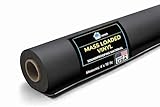
- High-Efficiency Sound sound barrier quiet...
- Mass-loaded vinyl 1 lb sound proofing for...
- Environmentally safe - Non-toxic and...
- Improve sound quality, creating a serene...
Since MLV has a wide variety of uses, it also has a variety of installation methods. If you were to install it inside a wall, you’d want to nail it to the studs. In some other cases, using glue would be more appropriate. It all depends on where you plan on putting the vinyl.
If you want to learn more about MLV, its uses, and various installation techniques, be sure to check out our detailed guide on the topic.
7. Hang up Paintings or Tapestries
Paintings and tapestries are an inexpensive way to treat your walls without committing to professional products. They can also conceal less attractive soundproofing solutions, such as MLV sheets applied over drywall. Although their blocking properties are abysmal, they can help soften sounds inside a room.
However, if you end up using paintings and tapestries in conjunction with mass-loaded vinyl, their sound-blocking properties will become irrelevant. Any success you get from using that combination would come from MLV. The fabric toppers would be mostly decorative at that point.
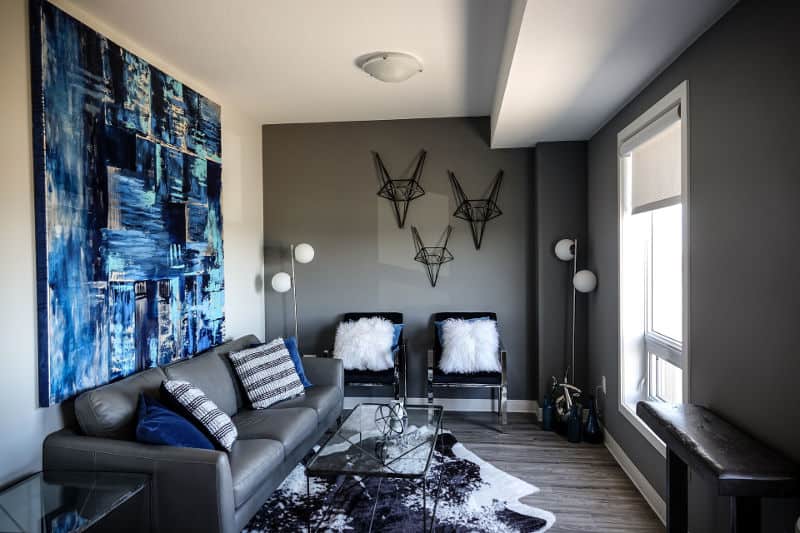
Still, if you hung paintings and tapestries on a flat wall, they would indeed have an effect on the acoustic properties of the room. In an empty room, every sound is amplified as it keeps bouncing against hard surfaces. Carpets and rugs prevent sound waves from bouncing against the floor and eliminate the more pressing issue of impact noise transfer.
Putting paintings and tapestries on the walls or even ceilings can have a similar effect. The three-dimensional objects can break up the flatness of a wall, leaving a smaller surface for the sound waves to bounce off of.
While they’re not perfect solutions, they’re worth trying, especially if you were planning to hang artwork or textiles anyway. It can be a two-in-one solution: décor and basic acoustic treatment.
8. Use Weatherstripping Tape
As you know, windows are very difficult to soundproof. If the weatherstripping seal between your window and the window frame has worn off, you may hear noise coming in from the outside even when the windows are shut. Fortunately, you can resolve the issue by scraping off the existing weatherstripping and applying new tape.
Weatherstripping products are prone to decay, so you’ll have to swap them out at some point anyway. If you’re unsure whether yours need to be changed, close your windows and try to feel the air passing through. You could even get a lighter and move it around the perimeter of the window while looking for the cracks. The flame will flicker when you come across a weak spot.
If you find any, you’ll have to take off the existing rubber and thoroughly clean the area before applying the new tape. And you won’t even have to get the same kind of product as the one you already had on the window. For example, this weatherstripping tape is D-shaped with a hollow core that allows it to create the perfect seal. However, other weatherstripping products are simple foam rubber rectangles that should compress just fine even without the air pocket.

- 【Multi-function】This indoor weather...
- 【Package content】2 rolls D type window...
- 【High quality】This window door seal strip...
- 【Usage&application】Our window door seal...
After you seal the windows, check if any of the doors that lead into the room could use a similar treatment. Most interior doors don’t have a built-in seal, so adding one should block noise as well as cold air from entering.
9. Apply Acoustic Caulk
If you can still feel a breeze coming through the sides of your windows even after applying new weatherstripping tape, you might have cracks in the surrounding walls. Whether your window was poorly installed or the cracks formed over time, you could fix the faults with acoustic caulk.
Again, you may do the flame test to discover cracks in the wall around the windows or doors. Once you do, you can apply the acoustic caulk in the same way you’d apply any other. You’ll just need to get your hands on a caulking gun that matches the size of your bottle.
After you apply the sealant wherever you deem it necessary, you’ll have to push it into the cracks with a gloved finger. When it sets, it should still be flexible enough to prevent new cracks from forming in the same spots.
Now, even though some areas of the wall are more vulnerable to fissures than others, cracks may pop up pretty much anywhere. You may even find some in the middle of the wall if you coated your drywall with one too many layers of paint over the years. Still, you should start checking for cracks around the windows and the doors. If you have any leftover caulk after dealing with those areas, look around the corners of the room as well.
Of course, acoustic caulk has other soundproofing uses. For example, you can use it to install MLV or make window plugs, just like any other adhesive. But for larger projects, like creating a drywall sandwich, you’ll want to get a damping compound like Green Glue.
10. Use Thicker Blinds
When you’re sure the window is sealed tight, you may have to deal with faults in the glass itself. Even if there are no cracks, you may still have to cover the glass if for no other reason than that it’s such a highly reflective material. That’s where window blinds come in.

Now, you shouldn’t expect your regular metal blinds to get the job done in this case. Since metal is another reflective material, aluminum blinds won’t be able to reduce the noise inside the room. At most, the irregular shape of the metal blinds may act as a diffuser of sorts. But that makes it only marginally better than having a flat glass pane there.
Ultimately, if you want to use blinds to improve the acoustics inside a room and prevent outdoor noise from coming in through the window, you’ll want to steer clear of flimsy metal blinds. Instead, go for thicker materials like rubber, vinyl, or blinds with collapsible air pockets. Once you start looking for those kinds of products, you’ll find plenty to choose from.
Alternatively, if your only goal is to prevent the blinds from making noise as they sway against the glass, get ones that are made of soft materials. Paper and fabric blinds are almost entirely silent. Wood ones do make some noise as they graze the glass but the sound is certainly more pleasant than metal clanging.
11. Cover the Windows With Soundproof Curtains
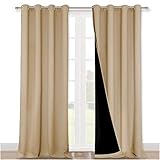
Soundproof curtains are an even better option for improving acoustics and blocking outside noise from coming in through the windows. The thick, densely woven fabric should absorb most sound waves that come into contact with it. Even better, these kinds of curtains are extremely effective at blocking out light as well.
If you want to make the most of this method, get curtains that are larger than the window you’re covering. The curtain rod should be a few inches above the window and just a bit wider than the window frame. Meanwhile, the curtains should be even wider than the curtain rod and long enough to cover the bottom of the window and then some.
- Ready Made: 2 panels per package. Each...
- Blackout Effect: The real blackout curtains...
- Noise Reducing: Heavyweight Blackout Lined...
- Unique Design: Draperies constructed with...
The extra fabric all around the window frame will trap any noise and light that enters the room through the window. Moreover, having the curtains be wider than the curtain rod will ensure that the fabric isn’t taut enough to reflect sound waves instead of diffusing and absorbing them.
Ultimately, the only issue you might have with soundproof curtains is that most of them have different colored sides. Presumably, you’ll have the less attractive side — which is usually black — facing the glass. However, if you don’t want people looking through your windows and seeing the black fabric, you might want to get room divider curtains instead.
12. Construct a Window Plug
Windows are the most vulnerable areas of any room in terms of how much noise they allow in. The glass itself can be an additional source of noise if you live on a busy street. The passing vehicles could be making it vibrate in its frame. Luckily, window plugs can deal with both of these problems simultaneously.
Even better, they’re exceedingly easy to DIY. You’ll just need to glue layers of MLV and acoustic foam to a sheet of wood according to your windows’ size. After you put these items together, finish the project by screwing at least two handles to the back side of the inserts. That will allow you to slide the plugs into the window frame whenever you want the additional soundproofing effect.
If the insert is a perfect fit, it should be able to block most frequencies from coming in from the outside. However, if you want to improve the acoustics properties inside the room in addition to blocking out the noise, you should cover the plugged windows with curtains or a free-standing fabric panel as well.
13. Use Room Divider Curtains to Make the Space Less Resonant
Room divider curtains usually have the same color fabric on both sides of the panel, making them equally attractive from either viewing point. That means that you could use them to divide your room into smaller sections as well as cover the windows — if you don’t want the outward-facing side to be black.
Like soundproof curtains, room divider curtains are thicker than your regular drapes. Many of them are also made of two or three layers of fabric, which makes them ideal for DIY projects involving MLV. You could just cut open a curtain panel, put a length of MLV in, and sew the curtain back shut to increase its efficacy.
As I have mentioned, you could use these products to split up a room. On a practical level, that would be a great way to separate the sleeping area in an open-concept space or simply hide a messy part of a room. However, it would also effectively reduce the total surface area sound waves could bounce off of. The heavy fabric would absorb and diffuse any noise that would have normally reverberated through space.
The only problem is that you’d have to think of an installation solution that fits into the room you’re working on. Regular curtain rods may not cut it, as they were designed to hold curtains above windows. So you might have to opt for a tension rod or ceiling track instead.
Either way, you’ll have to make sure that the curtains reach all the way to the floor. For optimal results, you should let the fabric pool on the ground to prevent sounds from escaping through the bottom gap.
14. Install a Door Sweep
No matter how much effort you put into soundproofing a room, it’ll all be for naught unless you address the gap underneath the door. One way to do that would be to install a door sweep by nailing or gluing one onto the bottom of the door.

Most door sweeps are made of a combination of rubber and metal or plastic. If you find one that’s entirely made of rubber, it’ll probably be self-adhesive. However, most of the door sweeps you’ll find are going to come with a bag of nails or screws you can use to attach them to your door. Just remember to put the flat metal or plastic part up against the door and the flexible rubber bit on the floor before you drive the first nail in.
Ideally, the rubber should even drag on the floor a bit when you move the door. That’s what’s going to give you the final seal you need to completely soundproof the room. However, it will certainly make the door harder to move. And, while there are automatic door sweeps that lift as you move the door and lower when the door is closed, there’s another solution you could try.
15. Make a DIY Draft Stopper
If you want to close the gap under your door without using nails or adhesive, you could make a draft stopper. Homemade draft stoppers are basically just two stuffed fabric tubes connected by a flat channel that slides under the door. If the fabric sleeve keeps shifting as you move the door, secure it with Velcro tape.
There are many ways to make a draft stopper. Some have done it by pouring rice into stockings or stuffing an old pillowcase with fabric scraps. You could either use fabric glue to make the basic shape of the tubes or break out the sewing machine. It’s completely up to you.
And if you want your draft stopper to be more effective, try making one tube longer than the other. Keep that tube on the side of the door that swings out, as shown in this video.
Alternatively, you could simply purchase a draft stopper online for less than $20. However, as most of them have a light foam stuffing, you might want to change that to something a bit heavier.
16. Block the Air Vent
Before you move on to bolstering your walls, you might want to check if there are any gaping holes you’ve missed. To be specific, you may still have an open air vent somewhere around. But don’t worry, there are several ways to close off those areas without damaging the ventilation system.
Obviously, it’s important to make sure the air vent in question isn’t too important. By blocking it, you’d almost certainly be messing with the airflow. However, if the room you’re soundproofing has windows, you should feel free to block the vent by:
- Putting drywall over it (then applying plaster over it, sanding it down, and painting it over)
- Filling it with sealant or expanding foam insulation
- Plugging it with acoustic foam
- Making a maze inside the vent that cuts down on the noise but still makes airflow possible
- Taping plywood on the inside of the vent grate and closing it, then taping over everything for good measure
If you just want to get the vent out of your sight, you could always cover it with furniture. Even if you block it using one of the aforementioned methods, you could hide the potentially unsightly result with a well-placed bookcase or armchair. Alternatively, you can soundproof the vent with curtains or blankets.
17. Put Stuffed Egg Cartons on the Walls and Ceilings
As long as you don’t expect egg cartons to block and absorb noise, you can pin them all over your walls. But if you can’t rely on this method to achieve these basic goals, what can it do? Well, if nothing else, the cartons will act as sound diffusers.
At the very least, the pyramid shape of the egg cartons should prevent wayward sound waves from interacting with the flat walls directly. If that’s the only thing you’re trying to prevent — this method should do the trick. However, if you’re looking for ways to improve upon it, there are some additional tips you could try.
If you want to add mass to this solution, you could apply MLV or even just plain rubber to the wall before tacking on your egg cartons. Additionally, you could fill one side of the carton to make it thicker. I suggest a mixture of paper and fabric scraps fused with glue, starch, or wallpaper paste. Alternatively, you can just stick to professional acoustic solutions.
18. Hang Soundproof Blankets Over the Walls and Doors
Soundproof blankets can be used to improve the acoustic properties of a room in any number of ways. You can nail or glue them to walls, over doors, even use them as curtains. However, if you want to amp up this method, you won’t reach for just any blanket — you’ll go for the heaviest one you can find.
For example, did you know that audio engineers often use moving blankets — which are denser and more durable than your average quilt — for soundproofing purposes? Those products are pretty affordable for the kind of noise blocking they offer. However, they’re not really the most attractive soundproofing solution, so that’s something you should keep in mind.
19. Tape or Pin Some Acoustic Tiles
Acoustic tiles have been used by audio recording specialists for decades. While they can’t stop any noise from entering a room, they should be able to get rid of excess frequencies that are bouncing around inside it. Best of all, they’ll be easy to set up!
You’ll just need to get the foam tiles of your choice and some push pins or double-sided tape. Since acoustic tiles are generally pretty light, they should stay up without a problem. Alternatively, if you’re not afraid of commitment, you could also glue them to the wall permanently. But keep in mind, when you decide you don’t want the tiles anymore, you’ll have some serious scraping to do.
20. Install Acoustic Fabric Panels
If you’d rather have something more robust than foam tiles on your walls, you might want to look into acoustic fabric panels. These fabric-wrapped insulation-packed wooden frames are perfect for walls and ceilings. However, since they’re made of sturdier stuff than foam tiles, the mounting process may be more demanding.
Even though fabric panels look like premium products, they’re actually pretty easy to make. To make a single panel, you’ll need an insulation batt and four planks that are about as wide as the batt is thick. To make a rectangle, you’ll need two long and two short planks — just measure the sides of the insulation. Lastly, you’ll want to get some kind of fabric and a large piece of plywood for the back.
After you nail and staple everything together, your fabric panels will be ready for mounting. As a final touch, you can add some kind of hanging attachments like Z-clips or L-brackets.
Watch this short video for more detailed instructions:
Do Budget Soundproofing Methods Really Work?
Now, I know what you’re thinking. Sure, you could soundproof your home yourself, but what kind of results can you really expect? You should try them and see — you may be surprised!
Even though not all of the methods mentioned above will be equally effective, many of them will do wonders for your home. Filling out the room you’re soundproofing with soft fabrics and furniture really will make it much more acoustically pleasing than leaving it bare. Additionally, taking the time to seal the doors and windows will audibly affect the decibel levels in the room.
Those are the most important steps you can take. However, if you’re wondering about the kind of results you might have with professional methods, I’d be happy to elaborate below.
Professional Room Soundproofing Solutions
Now that we’ve seen the cheapest ways to soundproof a room, let’s review some of the more advanced solutions.
Buy Soundproof Windows
No matter how hard you try, you’ll never be able to fully soundproof a window that only has one layer of glass. These kinds of windows are a thing of the past anyway — so why not upgrade to PVC windows instead?
Even though wooden window frames are thicker than light PVC ones, modern windows are still better in more ways than one. They often offer double- or triple-pane glass built into weatherstripped window frames. And, thanks to the pointed acoustic caulk tip I shared above, you’ll know exactly how to make sure your new soundproof windows are completely set in your wall.
Replace Hollow Doors With Solid-Core Ones
I’m going to go out on a limb and assume that the room you’re soundproofing has a hollow door. That’s just the most typical kind of door we use in our homes. But if you have any cash to spare, I advise you to spend it on a solid-core door.
If you’re not afraid of rolling up your sleeves, you could also attempt to fill the inside of your hollow door with expanding foam. However, if your budget can handle it, it would be much easier to just buy a new door.
Add Another Layer of Drywall
The best way to make sure sounds can’t pass through a wall is to add mass to it. One way to do that would be to add a layer of drywall on top of the existing drywall. There are several ways to do that, but the most popular technique you’ll find is the Green Glue sandwich.
This method is usually used as the final step of a lengthy wall soundproofing project. However, if you wanted to skip a few steps, you could make it work without even removing the existing drywall.
To begin with, start by stripping your walls completely and applying Green Glue directly on one section and on the new drywall. After waiting for the Glue to become tacky, lift your drywall vertically and press it into the wall. If you want, you can push a bookshelf against it as it dries while you continue on your way.
Insulate the Walls From Within
If you want to thoroughly soundproof your walls, you’ll start from the inside and work your way out. First, you’ll need to rip off the existing drywall and assess the state of the insulation below. Then, you’ll build up the wall from scratch, starting with soundproof insulation, then topping that with MLV, resilient channels, and a Green Glue drywall sandwich.
If you determine that your ceiling needs a similar treatment, you can repeat the same process there. You could even install a suspended ceiling using resilient channels which, as always, will help decouple the surface of the ceiling from the joists above.
Alternatives to Soundproofing a Room
As effective as the solutions I’ve listed are, what if you can’t implement any of them? Many people just don’t have enough blankets to waste on walls — that’s completely understandable. Even if you have tried the methods I’ve mentioned, you may be looking to back them up through other means.
Well, several alternatives might be worth your consideration:
- Try wearing earplugs or earmuffs — or both at the same time — if you’re looking for complete silence
- If you plan on using your quiet room as an office, you might need noise-canceling headphones or headsets
- If you just want to tune out the world, you might want to get an electric or mechanical white noise machine or a whirring fan
Any one of these items could serve as another layer of protection against noise. But ultimately, you’ll have to decide which accessories you want to bring into your quiet haven.
What’s Next?
Hopefully, this article has sparked some ideas for how to soundproof a room on a budget — and maybe even inspired you to try a few free methods first. Remember, creating a quieter space doesn’t have to be expensive or complicated. Small changes can make a big difference.
Of course, every room is different, so the effectiveness of these techniques will depend on your specific setup, building materials, and even your neighbors’ noise habits. That’s why the best approach is to experiment: try one or two methods, see what works, and build from there until you reach the level of quiet you want.
Please share your experiences in the comment section. This will help everyone learn more about it and perhaps generate new ideas.
RELATED POSTS:
I rearranged the furniture in my room and it made a difference. I moved my desk and bed to the other side of the room and now I can hear much less noise.
I rent a room and am in Zoom meetings on an almost daily basis. Although the above sounds great its not practical in my situation. If anyone can give me some suggestions for any temporary solutions I would be forever grateful!
The article published is effective and cost effective
thanks
Nageswar Rao
These are great tips. I have been searching for some good materials in Muscat (Oman) but I failed. I will go for the EGGCARTONS….! It is lovely idea….!
Many thanks
You may use a door draft stopper for making your door soundproof instead of using those household things. They are also cheap…